Sura Insurance
Web Quote
Impact
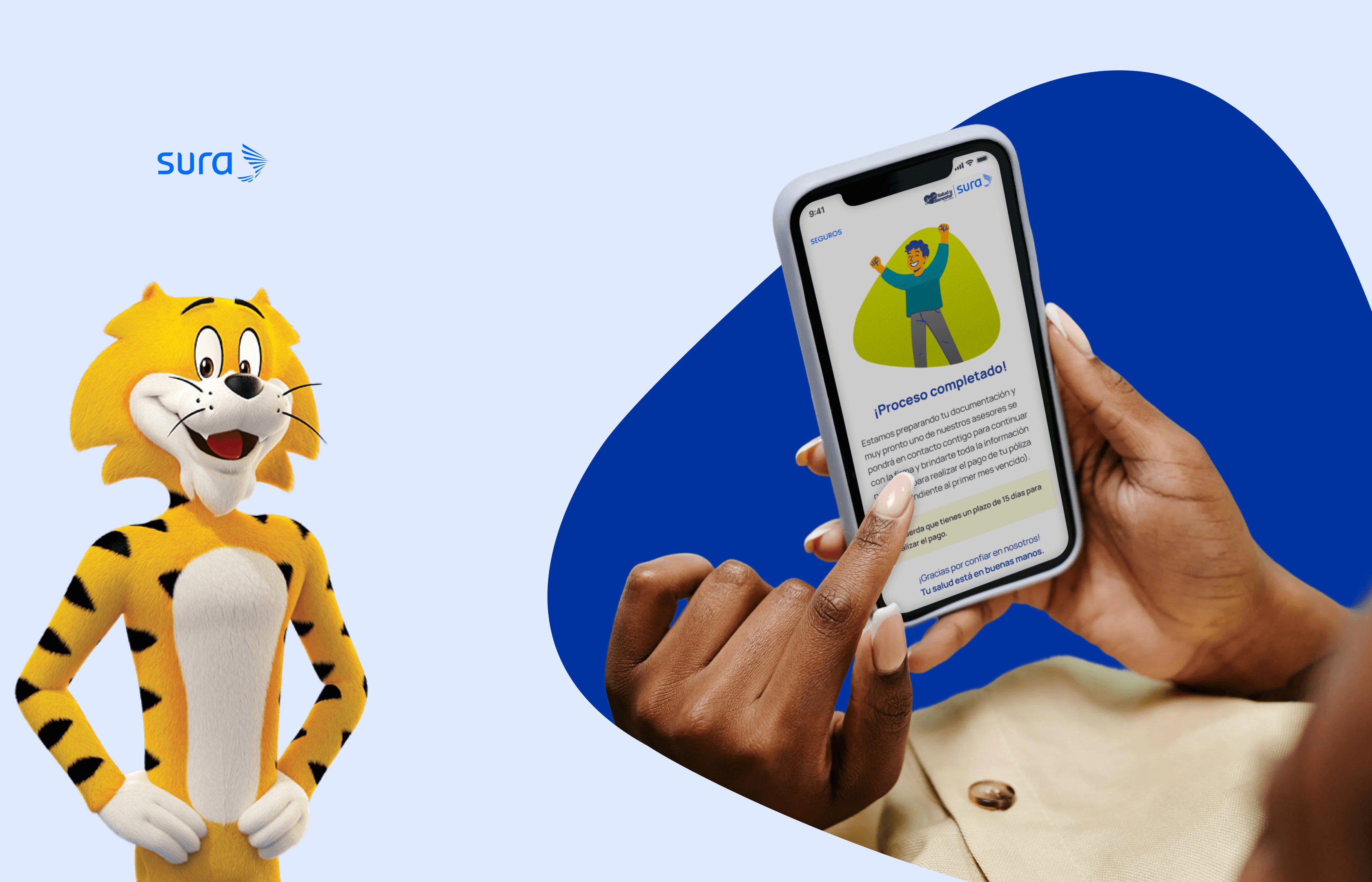
- Designed a self-service tool that automated the health, life, and prepaid medicine insurance quoting process, digitalizing a workflow that previously relied 100% on manual attention via WhatsApp.
- Identified and communicated a critical business risk to the client — the form length was generating drop-off — before the product went to production.
- The quoting tool reached production and operated for one month, validating in the real world the hypothesis raised during the design process.
[ Project image ]
Context
- Client: Salud y Bienestar CIA LTDA, an insurance agency specializing in prepaid medicine, health policies, and life insurance — an authorized Sura advisor.
- 90% of their clients historically initiated contact via WhatsApp and completed the purchase in under 24 hours. The human component was the business's key differentiator.
- Goal: design a mobile-first quoting experience that allowed users to get a quote easily, receive their rate, and connect with an advisor — within Sura's brand system.
- I worked as a freelancer alongside the CEO of Marketigrama, who prepared the initial brief and co-managed the client relationship.
[ Project image ]
Challenge
- Digitalize a process that depended entirely on personalized WhatsApp attention, without losing the warmth the business identified as its differentiator.
- Form with complex conditional logic: up to 4 people per quote, each with their own plan and independent medical responses (pre-existing conditions, pregnancy, cytologies, risk occupation), generating separate contracts.
- The client needed to capture significant medical information for business reasons (filtering quality leads, capturing data even from those who didn't qualify). I flagged this as a drop-off risk — the business decision was to keep it.
- No budget for formal user research; validation was done with the client and the CEO of Marketigrama.
[ Project image ]
My role
- Freelance UX/UI Designer, working alongside the CEO of Marketigrama.
- Requirements gathering directly with the client, iterating multiple times on the flow and screens across sessions via Google Meet.
- Direct communication with the development team at each phase, presenting the flow state and the form's conditional logic.
- Tools: Figma (user flow, wireframes, high-fidelity design, navigable prototype, handoff), Miro, Google Meet, Microsoft Teams, HubSpot.
[ Project image ]
Solution
- Two iterations of user flow: the first covers individual quoting with health questions by blocks, validations, and a final summary with success/error paths. The second expands the logic for multiple people, with repeatable question blocks and connection to the payment flow.
- Field-specific validations, error handling, and visible help paths at different points in the flow.
- Low-fidelity wireframes → high-fidelity design for mobile and desktop, following Sura's design system.
- Navigable Figma prototype to validate interactions, field conditions, and transitions.
- Design of the confirmation email (plan name, rate, coverage summary, PDF of terms) and a re-engagement flow for users who abandoned the process.
- Proactive communication to the client about the drop-off risk from the form's length.
[ Project image ]
Results
- The quoting tool reached production and operated for approximately one month.
- The risk flagged during design was confirmed in the real world: the form was too long, and users showed a preference for being contacted directly via WhatsApp.
- The client decided to pause the project based on that learning — validating that the human-attention model via WhatsApp remained more effective for this segment.
- Key takeaway: a good designer anticipates problems. That the product confirmed exactly what was flagged is not a failure — it's evidence that the analysis was correct.